

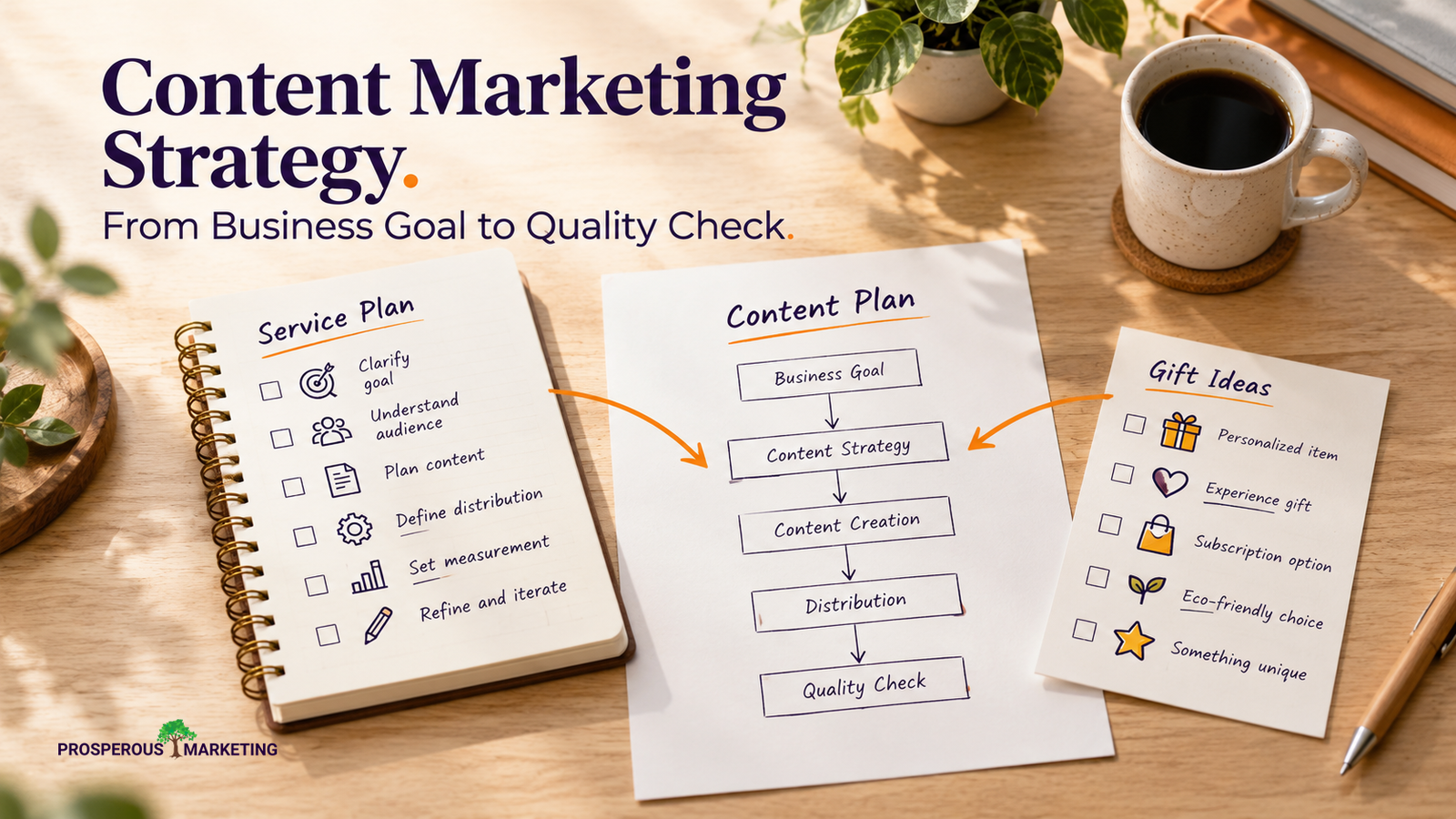
When I’m planning content for Prosperous Marketing and NuKrypton, I’m thinking about two quite different decisions. Someone reading a Prosperous Marketing article might be trying to work out how to handle part of their business. Someone visiting NuKrypton might be choosing a gift.
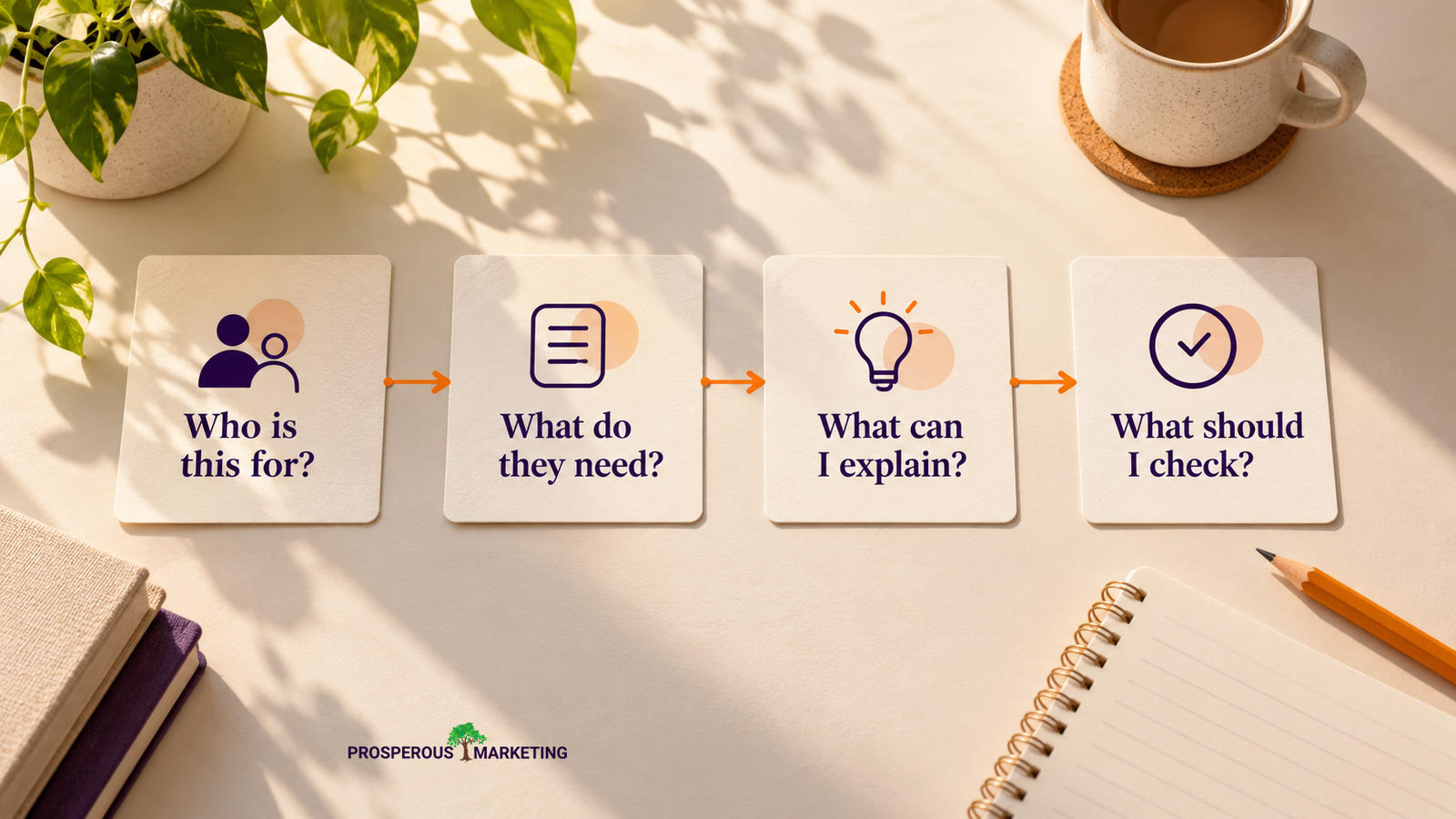
I want both businesses to make sales. But before I decide what to write, I need to understand what would help the person reading it. What are they trying to figure out? What can I explain? Where would it make sense for them to go next?
That’s where a content marketing strategy becomes useful to me. It helps me choose what’s worth making when there are plenty of topics, tools, and places to post. Here’s how I’m approaching it with both brands, and how you could use the same approach for your business.
Start with what your reader needs to figure out
“Get more sales” gives me a goal, but it doesn’t tell me what an article should say.
For Prosperous Marketing, I might explain a way to plan some work, walk through an example, or help a business owner see where they need support. Someone may use what they learn themselves. They may also decide to ask about getting help or subscribe because they want more of that kind of guidance.
With NuKrypton, I’m often thinking about the person buying a gift. Would this suit the person they’re buying for? Does the design mean something to them? What do they need to check before ordering?
Subscribers can be valuable to both businesses, too. If I’m asking someone to sign up, though, I need to be clear about what they’re getting and why they might want to hear from me again.
For your own content, try writing down these two answers:
- What do I want this to help my business do? That might be getting relevant inquiries or helping people choose a product.
- What does the reader need help with right now? Give the article a question it can actually answer.
Those answers should connect. If I can’t explain the connection yet, I’d spend a little more time there before adding another post to the calendar.
Use keyword research to look into an idea
I use Harbor SEO to find topic ideas and look at broad keyword estimates for both brands. It gives me somewhere to start, but I still have to decide whether the subject makes sense for the business and the people I want to reach.
Disclosure: If you purchase through a Harbor SEO affiliate link in this article, I may earn a commission.
For example, Harbor SEO’s October 2026 research for Prosperous Marketing included a marketing-plan topic about choosing an audience, deciding what to do, and knowing who would check the work. The tool showed 66.1K monthly searches across a group of related topics, while listing “marketing plan example” at 2.9K per month. I wouldn’t treat the larger number as the estimate for that one phrase.
For NuKrypton, the research included custom playing cards, with “custom playing cards” shown at 18.1K per month. That gave me a topic to look into. I still needed to ask what would help someone decide whether a personalized deck was a good gift.
Those numbers are estimates reported by the tool at the time. I don’t have enough information about the location, time period, or method behind them to make a more specific claim. They don’t tell us how many people will visit either website or buy something.
When you’re looking at a topic, I’d ask:
- Is this something my business can help with?
- What might the person searching for it be trying to decide?
- What can I add that would make the answer more useful?
- What would be a sensible next step for that reader?
A big number is interesting, but I still need a reason to choose the topic. A smaller one could be worth the work if it fits the people I’m trying to help.
Prosperous Marketing: show how the advice works
One Prosperous Marketing article takes the broad subject of a marketing plan and works through an email marketing example using Inbox Impact Blueprint.
That gives us something specific to talk about: planning when to send emails, choosing a resource people can sign up for, checking the contact list, setting up the emails, and asking customers for feedback after they’ve had a chance to experience the product or service.
The connections are what interest me. Putting an email on a calendar doesn’t explain why someone should receive it. If I offer a resource, I need to deliver what I promised. Then I can think about what would help that person next.
I’d start with the resource and the follow-up together. What question does the resource answer? What might someone still need help with after using it? That gives me a way to build toward an offer without assuming everyone who signs up is ready to buy.
If you run a service business, your plan could look like this:
| What to decide | A service-business example |
|---|---|
| What you want to support | Relevant inquiries and eventual sales |
| What the reader needs | Help planning a particular part of their work |
| What the article will do | Walk through a clear example they can follow |
| What you need to write it | Accurate information, a useful example, and your own judgment about what matters |
| Where the reader can go next | Try the approach or look into a relevant resource or service |
| What to check | Does the explanation make sense, and does the next step follow from it? |
If your subject feels too big, try choosing one situation you can explain properly. You don’t have to cover everything your business knows in the same article.
NuKrypton: help someone choose a gift
NuKrypton’s custom-playing-cards article starts with the person receiving the gift. Do you know them well enough to know what the picture would mean to them?

The burger design is a good example. It could be a fun choice for someone who loves making burgers and enjoys a card game. But imagine someone who associates burgers with a job they dislike. The same picture could land very differently.
Those are imagined situations to help explain the choice, rather than stories from customers. The point is to think about what the person enjoys instead of choosing a design based on one thing you know about them.
From there, the article gets into what to check before ordering: what can be personalized, how to send the image, and which product details matter to the buyer. Real product pictures help explain those details. An illustration can help tell the story, but it can’t show you exactly what you’ll receive.
Here’s how I’d map that kind of article:
| What to decide | An online-shop example |
|---|---|
| What you want to support | Helping people choose a suitable product and decide whether to buy |
| What the reader needs | Is this a good gift for this person, and what should I check? |
| What the article will do | Explain who the gift might suit and what to know before ordering |
| What you need to write it | Real product pictures, current details, and examples clearly presented as possibilities |
| Where the reader can go next | Look at the product and check the details for their idea |
| What to check | Are the details accurate, and is it clear which pictured options are actually available? |
You can use that thinking for another kind of product. Start with what your customer needs to decide, then help them find the information that matters to that choice.
Make the article useful enough to share in other ways
I’ve been building longer pieces that I can also draw from for social posts and articles elsewhere. That doesn’t mean every post needs to say the same thing or simply send people to a link.
The email-planning example could become a post about choosing a sign-up resource and its follow-up together. The playing-card example could become a post about why someone’s enjoyment tells you more about a gift than their job does.
Each one gives me a particular point to explain. Someone should be able to get something useful from the post even if they don’t go on to read the full article.
For something longer on Medium, I’d want enough explanation for the article to be worth reading there, too. Substack is another possibility I’m considering, rather than a publication I’m already running as part of this plan.
I’d choose the places you can keep up with. Having content ready for several platforms is a start; you still have to share it and learn whether it helps the people you want to reach.
Get what you need together, then start writing
I’ve spent time gathering brand information, audience details, ideas, and sources before getting to the work itself. That preparation mattered. It could also become the part I kept doing while the thing I wanted to finish was still waiting.
What I want now is enough information to make a useful start, with a clear idea of what needs checking.
If someone else is writing for you, could they tell who they’re helping, what question to answer, and which information to use? Do they know what they shouldn’t promise? If you’re writing it yourself, those questions still help.
Then read what comes back with the subject in mind. For a service article, does the explanation work, and does the resource do what you say it does? For a product article, do the words match the listing and photographs? Have you left out anything someone needs to know before deciding?
Tools can help you organize and write. You still need someone who knows enough about the subject to notice when something doesn’t make sense.
Put your content marketing plan on one page
Try this for one article before planning a whole schedule.
| What to write down | What you need to know |
|---|---|
| Business goal | How you want the piece to help your business |
| Reader and question | Who it’s for and what they’re trying to figure out |
| Why this topic | Questions or research that make it worth considering, including what you don’t know |
| Information to use | Current details, examples, sources, and relevant existing content |
| What you’re making | What the finished piece should explain |
| Next step | What the reader can usefully do afterward |
| Where it belongs | The format and place that fit the piece |
| Who will do it | Who will write it and keep it up to date |
| Who will check it | Who will check the explanation, facts, links, and images |
| What to look at afterward | What you can learn once it’s shared, and when you’ll look again |
| What’s still missing | Questions, time limits, or information you need before going further |
A small business content strategy can include improving something you already have. Before starting another article, read the relevant one on your site. Would a better example, a clearer next step, or updated information make it more helpful?
If the question isn’t answered anywhere, you may have a good reason to make something new.
Look at what happened, not just what you hoped for
Someone visiting a page, signing up, asking a question, and buying something are different steps. Decide which ones you can actually see and what each tells you.
For both brands, I want the work to support sales and revenue. Relevant inquiries and subscribers can matter along the way. Reaching a visitor later with paid ads is another possibility, but a visit alone doesn’t tell me that it happened or led to a sale.
I’m sharing how I’m planning the work here, rather than reporting an increase in sales or subscribers from these examples.
For your own content, check that it’s accurate and useful before you share it. Afterward, look at the information you have. If you don’t know where you started, leave that as unknown instead of calling it zero.
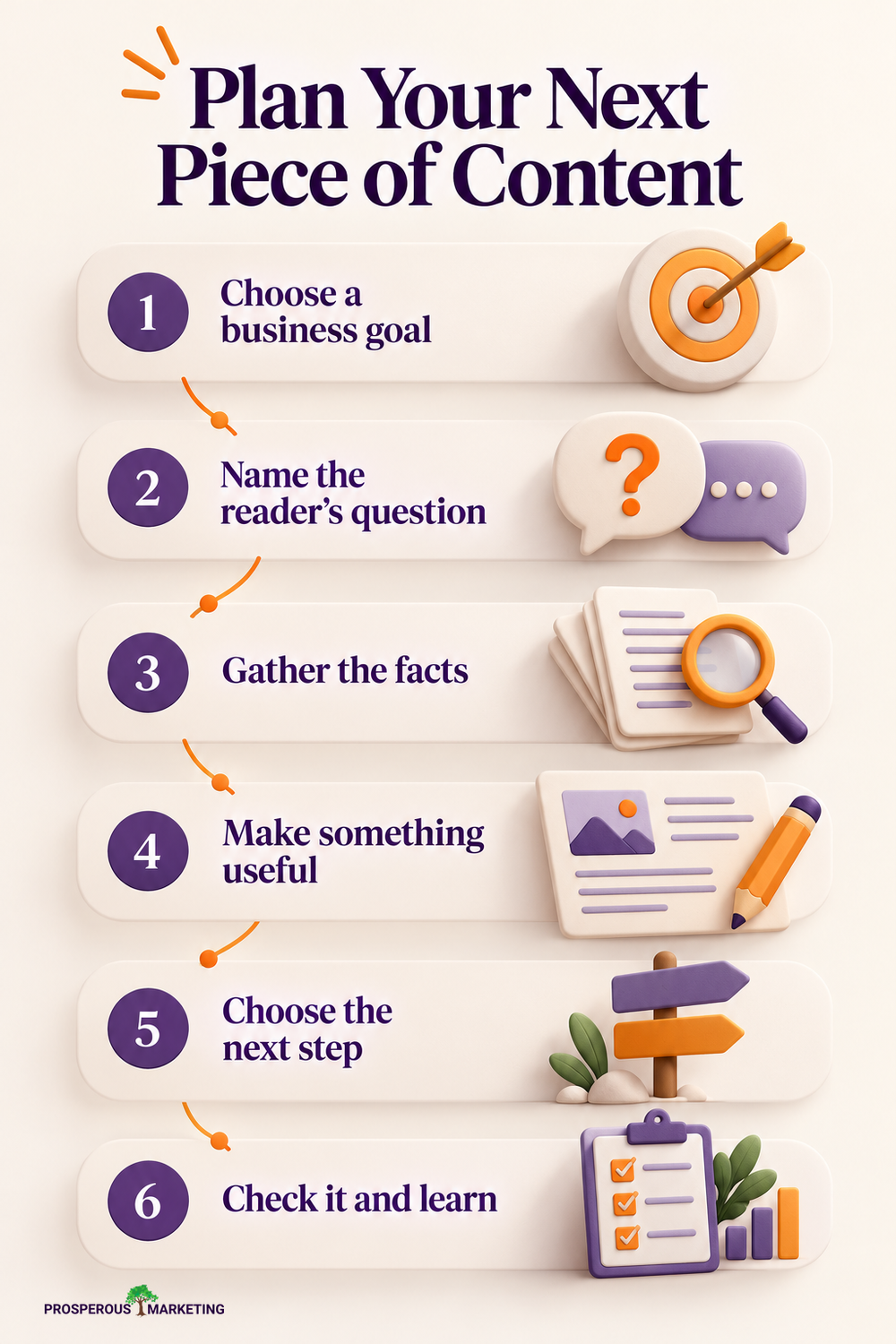
Pick one piece to work through. What would help the reader, what do you need to explain it, and what should happen next? Get those answers clear enough that you can start, check the work, and learn from what happens.
Disclosure: If you purchase through a Harbor SEO affiliate link in this article, I may earn a commission.