
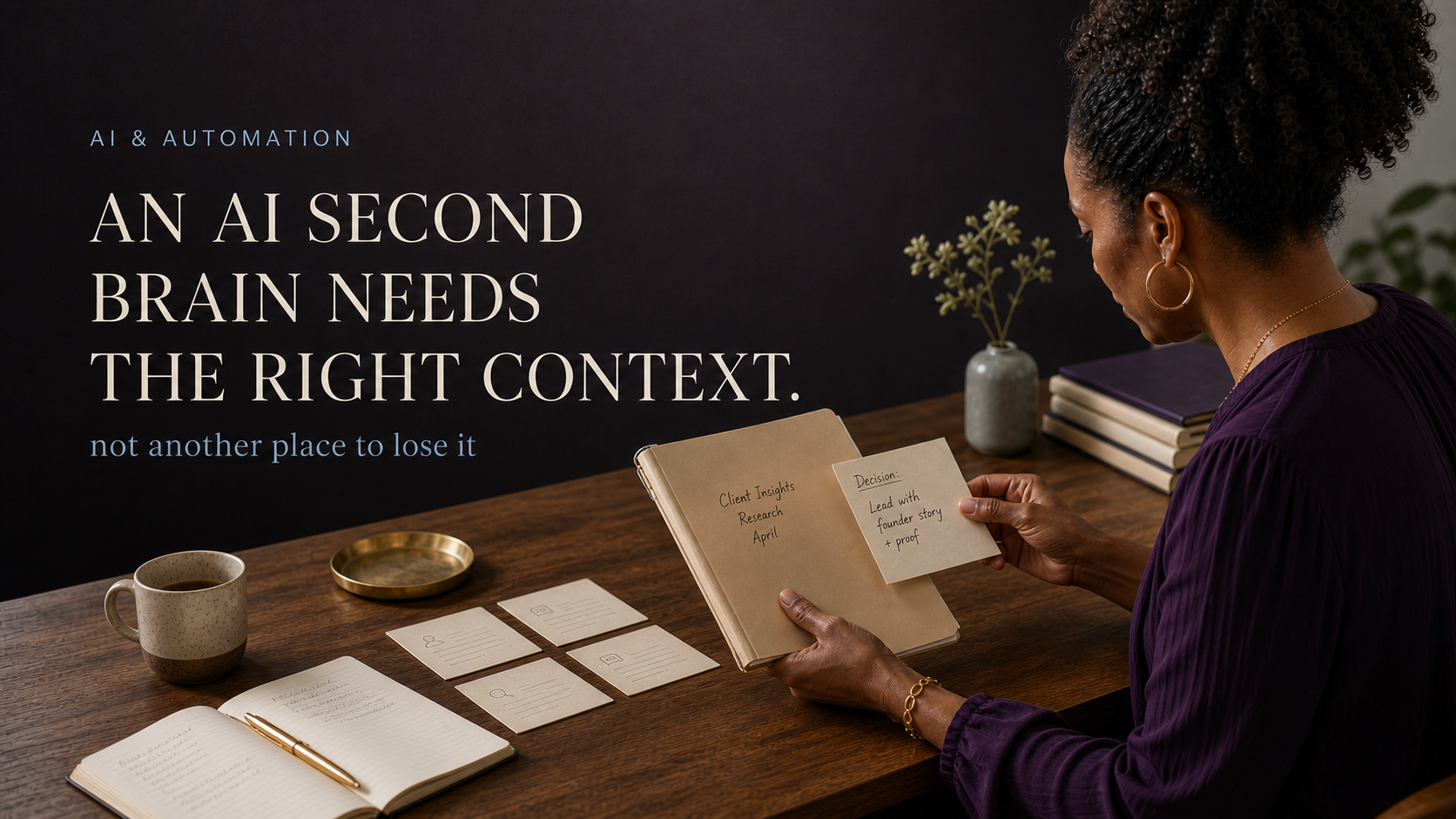

I thought more AI tools would make my work faster.
For a while, they did the opposite.
Every new tool created another place to put context, another setup to maintain, and another workflow to learn. Some of the tools were genuinely useful. The problem was that too much time was going into preparing to work with AI and not enough into moving the actual deliverable forward.
That experience is what led me toward an AI second brain.
Watch to hear the story:
When preparation starts replacing the work
The problem became clear during a client YouTube optimization project.
The work needed strategy, outlines, templates, approved direction, audience context, and details specific to that business. A new project, chat, custom setup, or folder could help, but the foundation still had to be rebuilt whenever another piece of work began.
Collect the files. Check what changed. Find the decision. Recreate the context. Try to remember why the earlier choice was made.
That preparation can look productive. Sometimes it is. Sometimes it becomes a polished delay between the question and the deliverable.
I did not need a system that made the uncertainty move faster. I needed a structure that could hold the right context and bring it back when the work called for it.

I felt this most when a piece of work needed strategy, approved direction, audience understanding, templates, and the decisions already made for one specific business. A new chat, a new setup, or another folder could help, but each new task still began with rebuilding the foundation: finding the information, checking what had changed, and remembering why an earlier decision had been made.
What “AI second brain” means here
I do not mean:
- a magical replacement for thinking;
- a giant pile of notes that automatically understands everything;
- a tool stack everyone else should copy; or
- the first system every business should build.
For me, an AI second brain became a more intentional memory layer: a searchable foundation for reusable agency knowledge, with separate context for a client, brand, project, or campaign.
The point was not to collect more information. It was to recover the information that already mattered.
The source matters as much as the answer
A polished answer is not enough.
The system needs to distinguish:
- approved strategy from reference material;
- current information from outdated notes;
- founder experience from general recommendation;
- brand truth from a creative idea;
- and usable context from something that still needs review.
In a controlled test, the system surfaced approved agency strategy, brand information, voice guidance, offers, audience context, and campaign materials for a marketing task. It also showed material that was still reference-only or needed review.
That distinction mattered. I could see what the draft was pulling from instead of taking a polished answer on faith.
What mattered was not a claim that the system had every answer. It was being able to see the sources behind a draft and tell the difference between approved material, reference-only material, and something that still needed review. The test also exposed retrieval rules and source cleanup that needed work. That was useful evidence, not a reason to hide the gap.
The test also exposed retrieval rules and source cleanup that still needed work. That was useful information too. A reliable system should show what it knows, what it is using, and what still needs a person to decide.
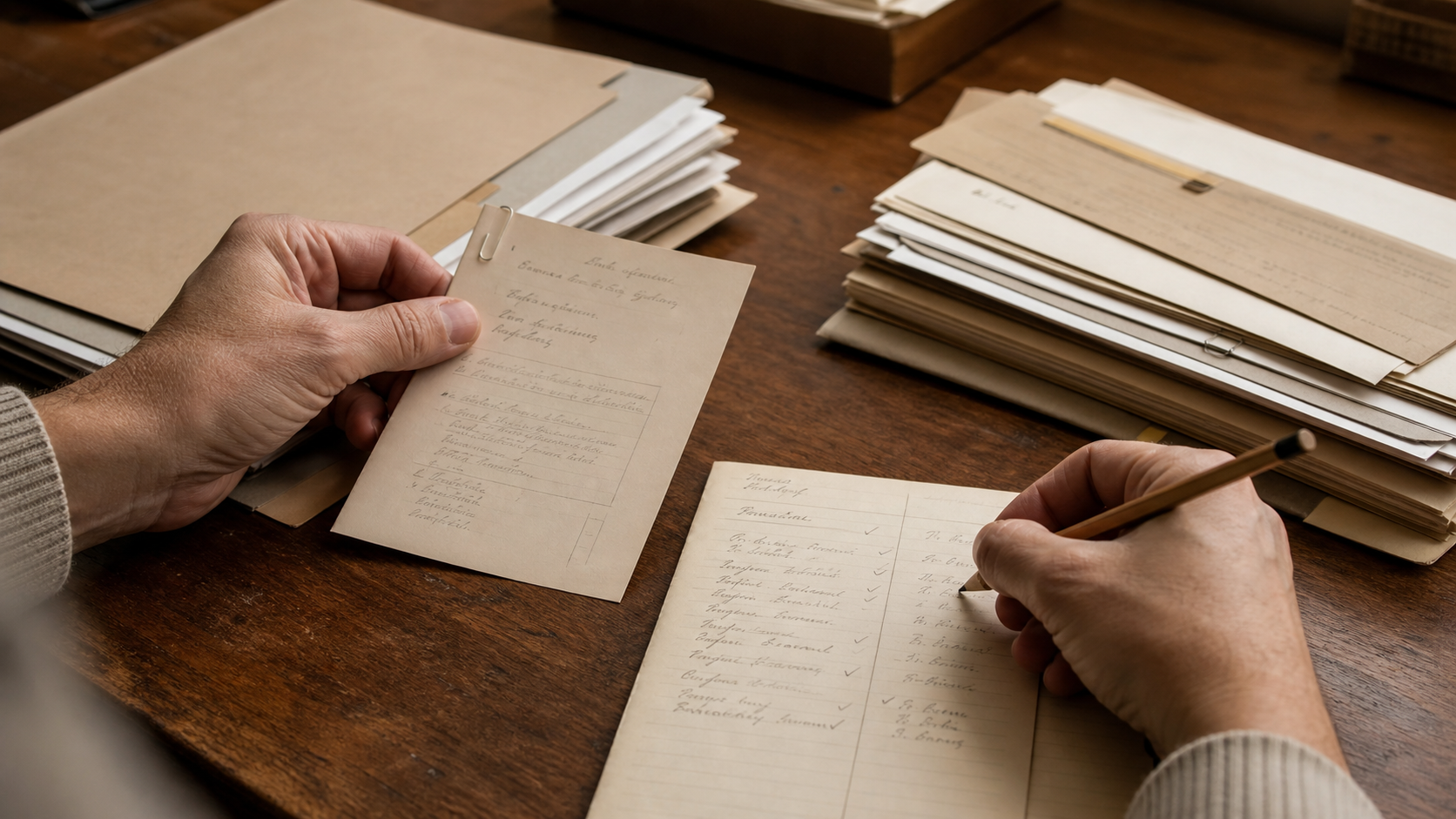
Knowledge base and workspace are different jobs
In my implementation, the knowledge base is where I keep and search the context. The workspace (Codex) is where I use that context to do the work.
That is an implementation choice, not a universal product integration or a stack I am telling everyone to copy.
The useful question is not “Which second-brain tool should I buy?”
It is:
- What work are you trying to move forward?
- What context does that work need?
- Which sources are approved?
- What should happen after the draft?
- Where must human judgment remain?
Human review stays in the system
AI can help draft, organize, summarize, and connect useful sources.
That is the boundary I keep: the system can help retrieve, organize, and prepare. A person still decides what is accurate enough, appropriate enough, and ready to be used.
Before something is sent, published, or used to guide a client decision, a person still needs to inspect it.
Check the facts. Check the claims. Check whether the output answers the question. Check whether it belongs in the real world, not only in a chat window.
Human review is not a failure of the second brain. It is what makes the workflow safe enough to use.
Clarity still comes first
An AI second brain can be a useful next step when scattered context is the real problem.
It is not the starting point for everyone.
If you are still caught in tool-first thinking, watch:
If you are ready to map the problem, strategy, inputs, outputs, tool choice, and refinement loop, start here:
Open the interactive AI Workflow Builder Map:
https://app.prosperousmaps.com/maps/NjAwMzE_c2VtPTE=
Download the static PDF with notes:
https://drive.google.com/file/d/1Y0tCCLF_FZEaCBP120OsimDjHd0GFQnc/view?usp=drive_link